%401x.png)



In translating drawings and plans into operational buildings, the leap from abstract detail to tangible outcome is fraught with risk. Discrepancies in design can result in defects in delivery, misalignment between architectural plans and engineering schematics can send expensive consultants back to the drawing board, and challenges tracking completion can lead to disputes around payment of subcontractors.
To reduce risk, abstract information and drawings need to be supported with multidimensional visual and spatial models and time-sequenced reality capture. This can integrate multiple streams of information including 3D design in the form of Building Information Modelling (BIM), drone imagery, structural scans, 360-degree camera imagery, engineering schematics, artists’ impressions, time-stamped progress images, and other sources.
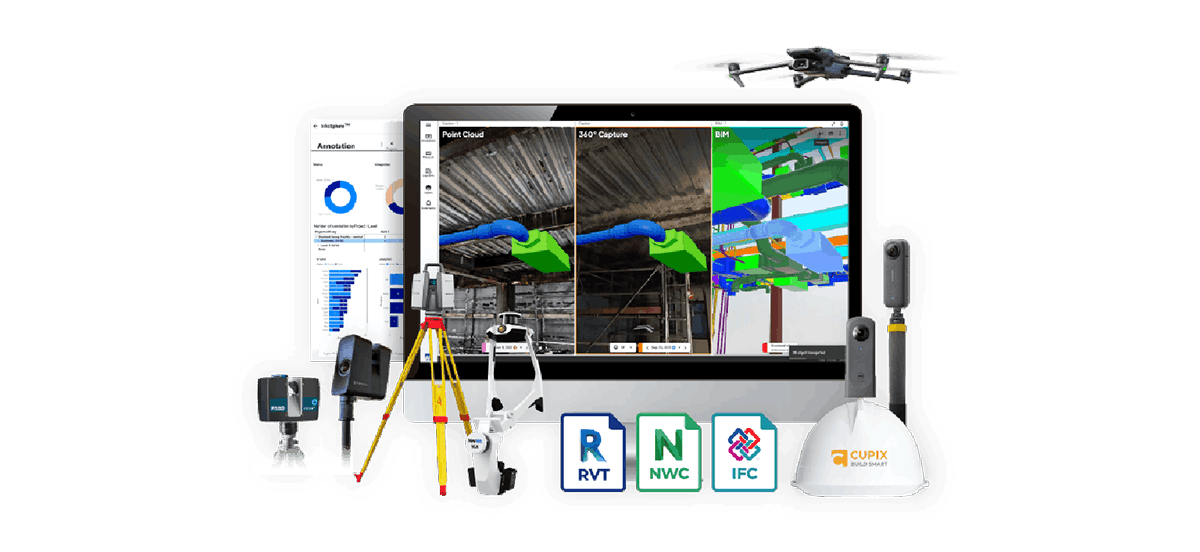
Cupix technology ensures all of these diverse reality capture data streams can be coordinated, linked and effectively quality-managed for time and location. Dedicated AI within the Cupix solution aligns, corrects and synthesises related data for a nimble, interactive digital twin output.
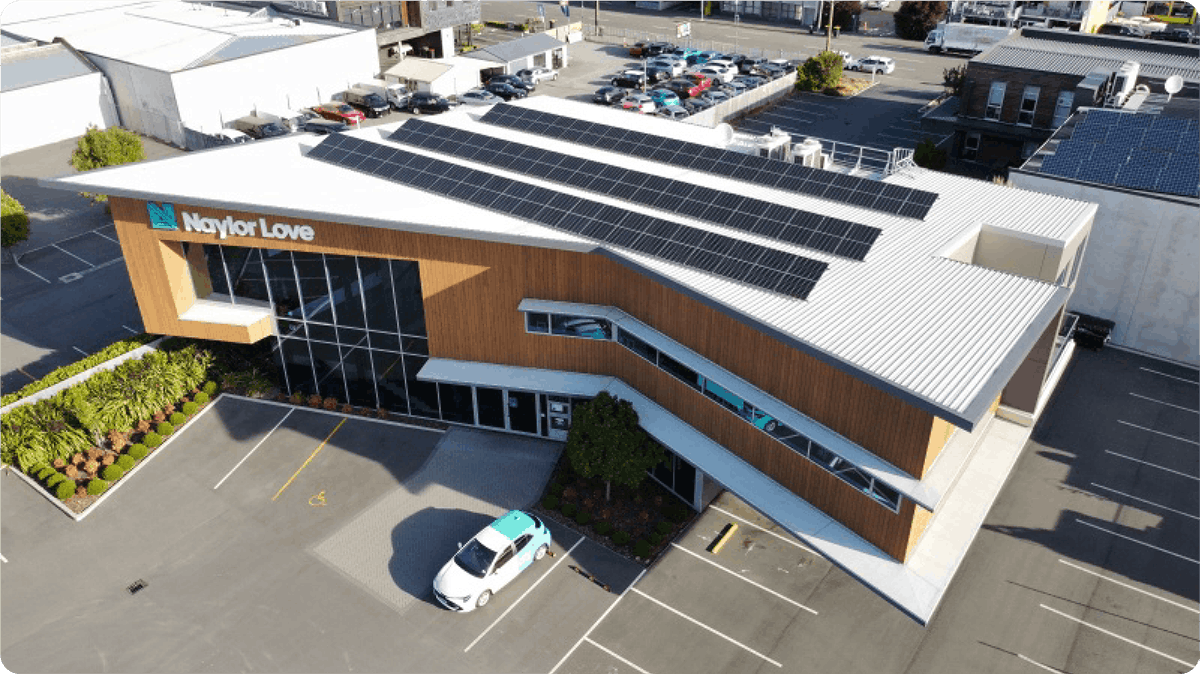
This gives project teams and stakeholders access to a virtual build from anywhere, something Cupix client Naylor Love has found enormously beneficial for improving efficiency, quality and coordination.
Discovering the potential of virtual builds
Naylor Love is a New Zealand-based contractor with around 900 staff and at any given time around 100 projects on the go across sectors including education, healthcare, Heritage and commercial buildings.
The approach to implementing Cupix has been one of discovery, experimenting and ongoing collaboration both with their own team and the Cupix team.
At first Cupix was used to capture and coordinate digital photo imagery and BIM information from a couple of live projects, according to Naylor Love Group Digital BIM Manager, Sean Wang.
This gave the team confidence to expand the use to a growing number of projects, with the goal of using Cupix to support the building not only of projects but also of the people involved. The goal is to create a sustainable future for the business, its staff and its clients.
Getting smart about AI use
The AI (artificial intelligence) embedded within Cupix was not new territory. Wang says there had already been some adoption of AI for day-to-day business processes. Maintaining the human oversight of the quality, reliability and usefulness of AI-supported outputs from Cupix was a key part of the adoption process.
“We have been taking a cautious approach with on-site data, validating it and seeing how it can be safely and widely used,” Wang says.
Show, don’t just tell
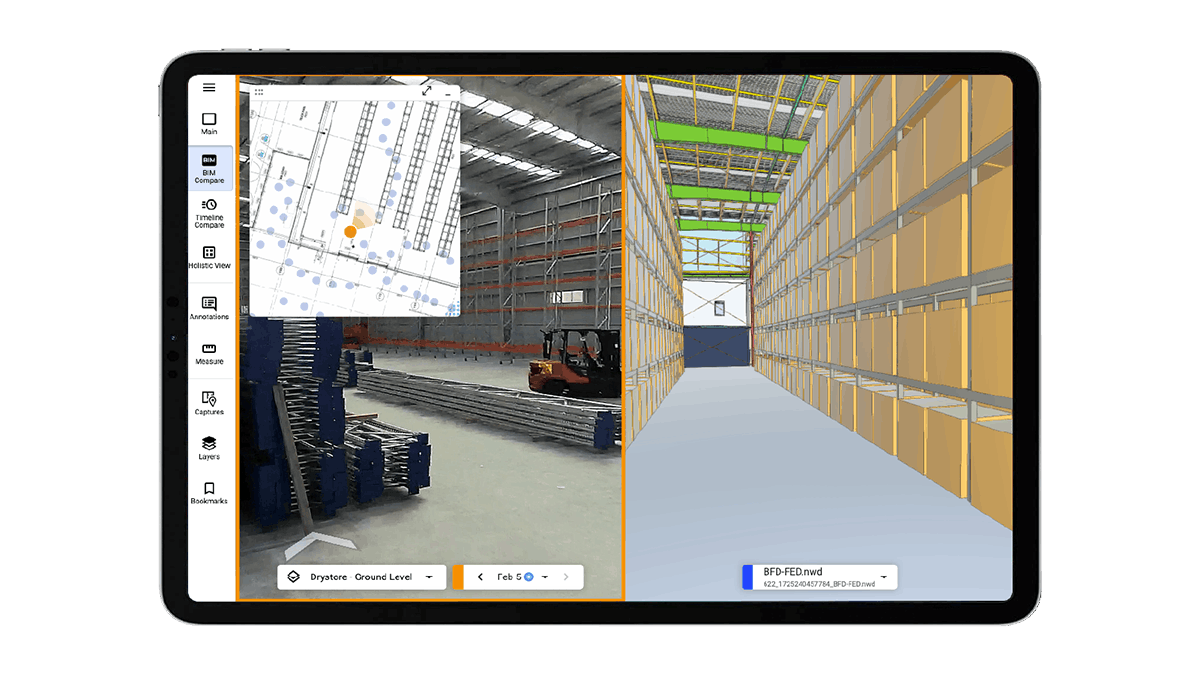
Early on, the ability to integrate the reality capture and BIM workflow raised some interesting possibilities. As the saying goes, to effectively explain something, show, don’t just tell. That’s where the capability to bring up layers of relevant systems and installation schematics ahead of works being undertaken gives project managers and the relevant trades and consultants a much clearer idea of what is required.
Also having the spatial dimension of location and measurements down to the exact tolerances required helps improve quality, compliance and final performance. This is especially beneficial for critical elements such as ductwork, electricals, sealing of penetrations and passive fire safety systems.
How reality capture serves everyone
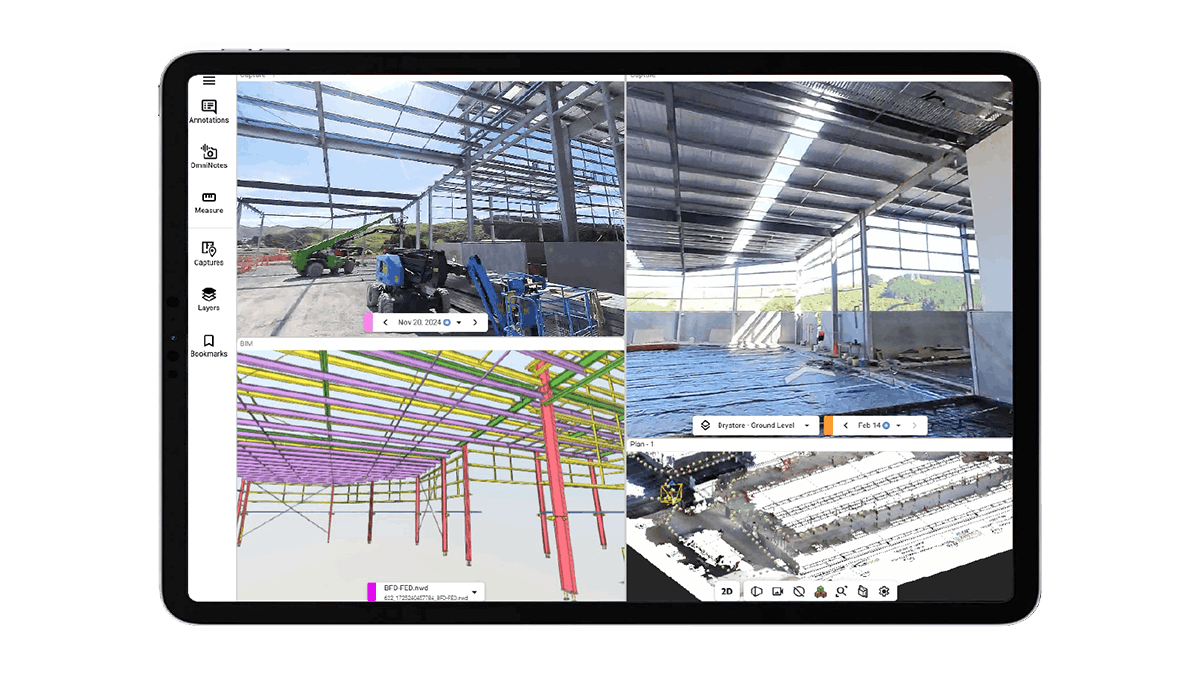
Wang’s team has been using daily captures and also functions associated with the BIM model, as part of conversations with project managers and construction teams. For example, progress on the building can be layered with the model as a virtual build and to show progress through time. Being able to see what is being done when, and by whom, and how sequencing fits together is a way of seeing reality capture through time.
Forward works can then be planned with much clearer understanding of what will be required. The project manager can show subcontractors how the final result should look through overlaying BIM model onto 3D photography of the actual site and works to date. This eliminates some of the mental guesswork involved in translating schematics or a digital 3D model into what might be happening on the ground.
“We are guiding the people (on the project) to see how we actually build the stuff,” Wang says.
It also means that when works have not been completed to standard, the notes and markup of the site supervisor on the reality capture can be shown to the people that need to go back and rectify the problem.
The principle of ‘evidence, or it didn’t happen’ can cut both ways in construction – reality can show what’s been achieved, and it can also cut through potential conflicts over who’s responsible for anything that’s not up to scratch.
Reality reduces stresses
The Cupix system also reduces the number of inter-team nudges required, for example, reminders to the BIM team to manually update the model with works completed. Instead, inputs of photography from onsite or drone captures can be processed via Cupix and added into the model.
This also helps ensure that any following trades, consultants or other relevant people accessing the BIM model will be seeing up-to-date information. This helps eliminate one of the most common causes of rework, which is people working to drawings or schematics that are out of date. When there’s less rework, there’s also less waste of materials and time, and a better story to tell the client about how works are progressing.
Of course, showing the client the latest outputs from the Cupix digital twin of the project is another way reality capture can improve outcomes for project stakeholders.
When there is proof in the form of images and video and documentation of how works are progressing, clients, regulators, finance teams and anyone else with an active interest in the smooth progress of works can be quickly given a credible and comprehensive snapshot of progress.
Equally, when a clash is detected, a design issue becomes apparent or some other issue occurs that means changes must be made to schematics, staging, methodology or key personnel, having the ability to give a detailed, spatial reality briefing of the state of play is invaluable.
Testing concepts for buildability
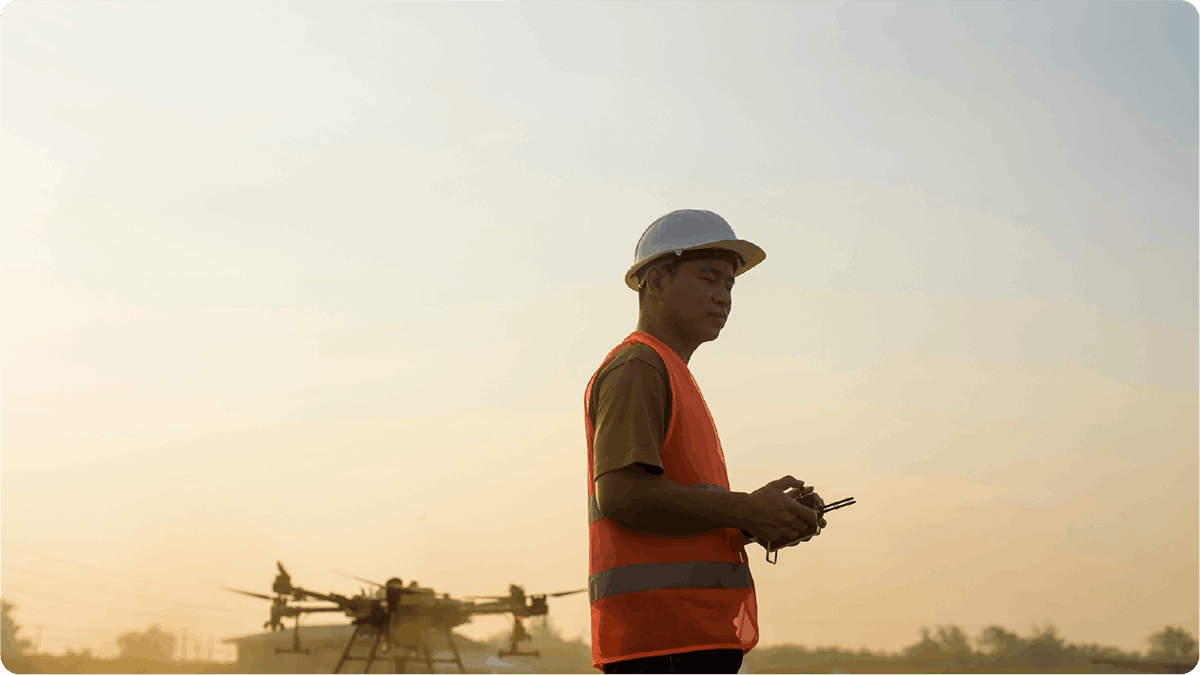
Ideas, innovations and solutions can also be tested against the real-world circumstances of the site, early works or any existing structural elements or building systems that have been captured. This is particularly valuable for retrofit, refurbishment or redevelopment projects, where existing conditions are a key project constraint. And if there are access issues for humans in obtaining information about the condition of a part of the building, using a drone or remote sensing equipment to gather intel and then feeding that into the model through Cupix resolves the information impasse.
Naylor Love has used this approach for some of its specialist Heritage projects, where condition surveys needed to inform design and delivery of strengthening works. The large scale of the projects and the complexity of the task was tackled by using Cupix to ensure all images from multiple cameras and from drone scans were spatially-aligned within a digital model of the existing building.
Wang’s BIM team were able to clearly indicate areas that required demolishing and layer in colour-coded elements for new reinforcing and concrete. This shows the builder not only what the existing site conditions look like, it also explains what new works will be expected and how those works interface with retained elements such as building services.
The value add is measurable
It’s a flip in thinking from traditional decision processes around software adoption, which usually consider cost versus return on investment. And the ROI is generally calculated based on time costs avoided, material costs avoided, or increases in productivity as a dollar value.
Naylor Love, by contrast, have looked at where Cupix adds value, and enhances the return on process, people and planning.
This may not come out as a neat financial equation; however, it does clearly align with major trends shaping the Asia-Pacific construction sector such as clients and stakeholders wanting visual data and information about projects. Having integrated, spatial reality data that can illustrate the key parameters of either a planned building, works in progress or operational phase assets also aligns well with the broader digitisation of regulatory and financial aspects of the property sector.