%401x.png)


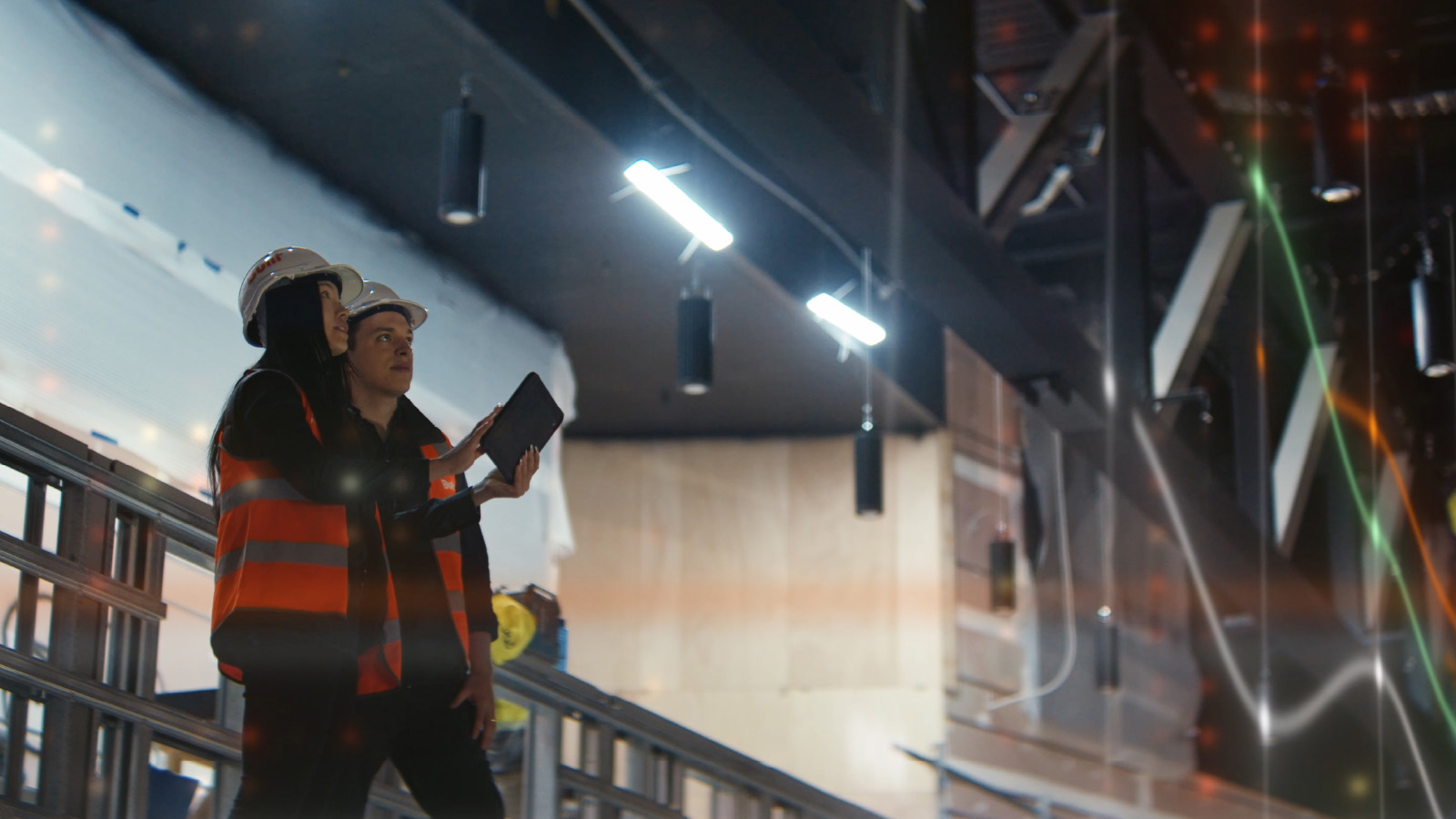
Known for their award-winning capabilities across demanding sectors including health, aged care, education, Green Star and WELL-rated commercial buildings and adaptive re-use projects, Australian contractor Built have been an early mover in the digital design and delivery space.
Kurt Brissett, Built’s Chief Digital and Information Officer, explains that digitisation has been embedded as an enabler for optimising design, enhancing efficiency, embedding sustainability and achieving a culture of continuous improvement.
Integrated construction models, often termed a digital twin, plays a significant role in achieving best practice. Built is working to evolve the concept from being a three-dimensional model of the project into an enhanced digital representation of the building that embeds key sustainability markets including carbon and energy.
This will enable the design and delivery teams to make informed decisions that support value engineering and value management not only from a fiscal viewpoint but also in terms of the impact of decisions on the building lifecycle and resource footprint.
Through leveraging tools such as AI, the potential is there for any design decision to be evaluated on the basis of impact on embodied carbon, operational efficiency and the lifecycle emissions footprint.
“Digital rehearsal is where we see the most compelling strategic opportunity – the ability to simulate decisions, de-risk delivery, and optimise outcomes before a single element is committed to site,” Brissett says.
Improving information sharing
Another benefit digital information processes and models are delivering is resolving the fragmentation that has been a feature of construction project data. Different stakeholders, different departments, and a variety of parties in the value chain all hold their own specific documentation and records.
However, without some mechanism for coordinating, collaborating and sharing relevant details, construction as a sector is unable to effectively learn from collective experience and improve processes and outcomes.
Internally, Built is using data management approaches that enable the creation of a universal standard for project information. The interface specifications are being designed to enable seamless exchange of data across systems including design, sustainability, delivery, finance and client engagement.
“Information architecture in construction must serve a genuinely complex ecosystem. Each stakeholder brings distinct data requirements, and when you layer in governmental and regulatory obligations, the case for a unified, intelligent data platform becomes undeniable,” Brissett explains.
This approach is already providing benefits in terms of reporting, coordination of project programs and collating data on building materials, specifications and performance that will be invaluable to the owners, operators and facilities managers of a completed built asset.
“The shift from static, two-dimensional documentation to a data-enriched, three-dimensional model represents a fundamental transformation in how we understand and manage our assets. We are no longer simply visualising a building, we are building an intelligent, dynamic representation of it that informs decisions across every phase of its lifecycle,” Brissett says.
“Our common data environment has evolved from an operational tool into a genuine strategic asset, the foundational intelligence layer that underpins how Built designs, delivers, and operates.”
This common data environment is also empowering Built’s people to develop their own bespoke AI agents to serve their information needs such as tracking compliance, analysing the benefits of a specific design or delivery innovation, or creating a report on a specific client or project partner.
Spatial reality and quality AI outputs

The quality of the data is crucial, as AI is only as effective as the information it has to work with. Historically, the construction industry has not always been effective at capturing project data and then utilising it for benchmarking and improvements.
“One of construction’s most persistent structural challenges is its tendency to treat each project as a new point of departure. The industry’s inability to systematically capture, retain, and apply institutional knowledge has constrained productivity and innovation for decades, and that is precisely what we are determined to change,” Brissett says.
Built is addressing this by attributing historical benchmarked data from a time, cost and sustainability perspective to the attributes of project models. This is not just for internal purposes: the clients and project partners are also being brought along on the journey.
This delivers granular insight including improved visibility of risk, for example, the likely effect of weather on program timing, or the predicted cost and material impacts of rework.
Not only is this valuable when a project is in planning stage, it helps inform the pre-project phases of tendering and bid. This is where digital is adding considerable value for Built, and supports tendering that is more effectively de-risked.
During design phase, the digital intelligence continues to support smart decisions. Brissett notes that around 80% of cost and time blowouts on construction projects can be directly attributed to decisions made during the design phase.
“When design decisions are underpinned by benchmarked data from comparable projects – accounting for time, cost, and sustainability performance – you fundamentally shift the value proposition of design itself. You move from educated estimation to evidence-led certainty, and that is a transformational capability.”
Reality capture as an enabler

Built has been working strategically with CUPIX to support its digital approach, including tracking build progress, and to correlate completed work with the design specifications and compliance requirements.
The reality capture approach has proven to be a major improvement compared to previous, manual approaches including trackers, site diaries and spreadsheets. Accuracy is enhanced and substantial time is saved.
Using the computer vision and AI built into the Cupix platform, Built’s project management team are also able to automate the process of comparing what has been constructed or installed onsite and the BIM model at an extremely granular level.
“The ability to track construction progress at high fidelity and with far greater frequency has fundamentally changed our risk posture. We can identify and respond to emerging issues in near real-time, which translates directly into better outcomes for our clients, our subcontractors, and our business,” Brissett explains.
It also enables the team to work more collaboratively with suppliers and subcontractors, as the visual data becomes a shared source of truth for making decisions and refining design, delivery or materials if needed.
The data also becomes a legacy that contributes to the common data environment Built is creating across its entire organisation and body of work.
“This creates a genuine feedback loop, each project enriches our intelligence base, so that future design and delivery decisions are grounded in verified, real-world performance data. We are building institutional memory at scale,” Brissett explains
This ongoing learning becomes a circular phenomenon that increases capability, supports improvement and enables Built’s team to add value to their roles and processes. The use of AI is saving time on manual processes, which then enables people to invest more thought and energy in higher-value work.
Cupix reality capture and Ai has also revolutionised the way Built manages defects.
“What this delivers is an objective, evidence-based framework for quality assurance, one that is verifiable, shareable, and removes ambiguity from what can otherwise be contentious conversations with supply chain partners. It elevates accountability across the entire delivery ecosystem,” Brissett explains.
“Ultimately, this is about establishing a shared source of truth – one that aligns our teams, our clients, and our supply chain partners around a common understanding of quality, progress, and expectations. That alignment is the foundation for collaborative, high-performance delivery.”
Levelling up as an industry

As an industry, construction has not generally achieved standardisation of information and project data including material and performance attributes across the asset lifecycle.
Aspects such as embodied carbon, for example, remain reliant on subcontractors and suppliers to contribute information, which may be in forms that do not lend themselves to integration with project models. The quality of information may also be inconsistent, and data gaps remain an issue.
This makes it difficult to create baselines and benchmarks to inform better practices across design, delivery and operations. Having clear metrics for sustainability is still a work in progress. Methods for collecting, aggregating and sharing information to achieve metrics for matters such as embodied carbon is going to require the different participants in the value chain to find improved ways to collaborate.
Brissett says that the digital information approaches are heading towards enabling the effective information exchange that will support industry to improve.
“The industry’s ambition must be to design with greater intelligence – selecting materials and systems on the basis of whole-of-life performance, resilience, and sustainability impact, not just upfront cost. Digital intelligence is what makes that level of decision-making achievable at scale,” Brissett says.
“We approach this as a genuinely collaborative endeavour with our clients – operating with full transparency that goes well beyond risk mitigation. We are equally focused on identifying opportunities to deliver smarter, faster, and more efficiently, and ensuring our clients share in those gains. That is the value proposition that digital intelligence unlocks.”