%401x.png)


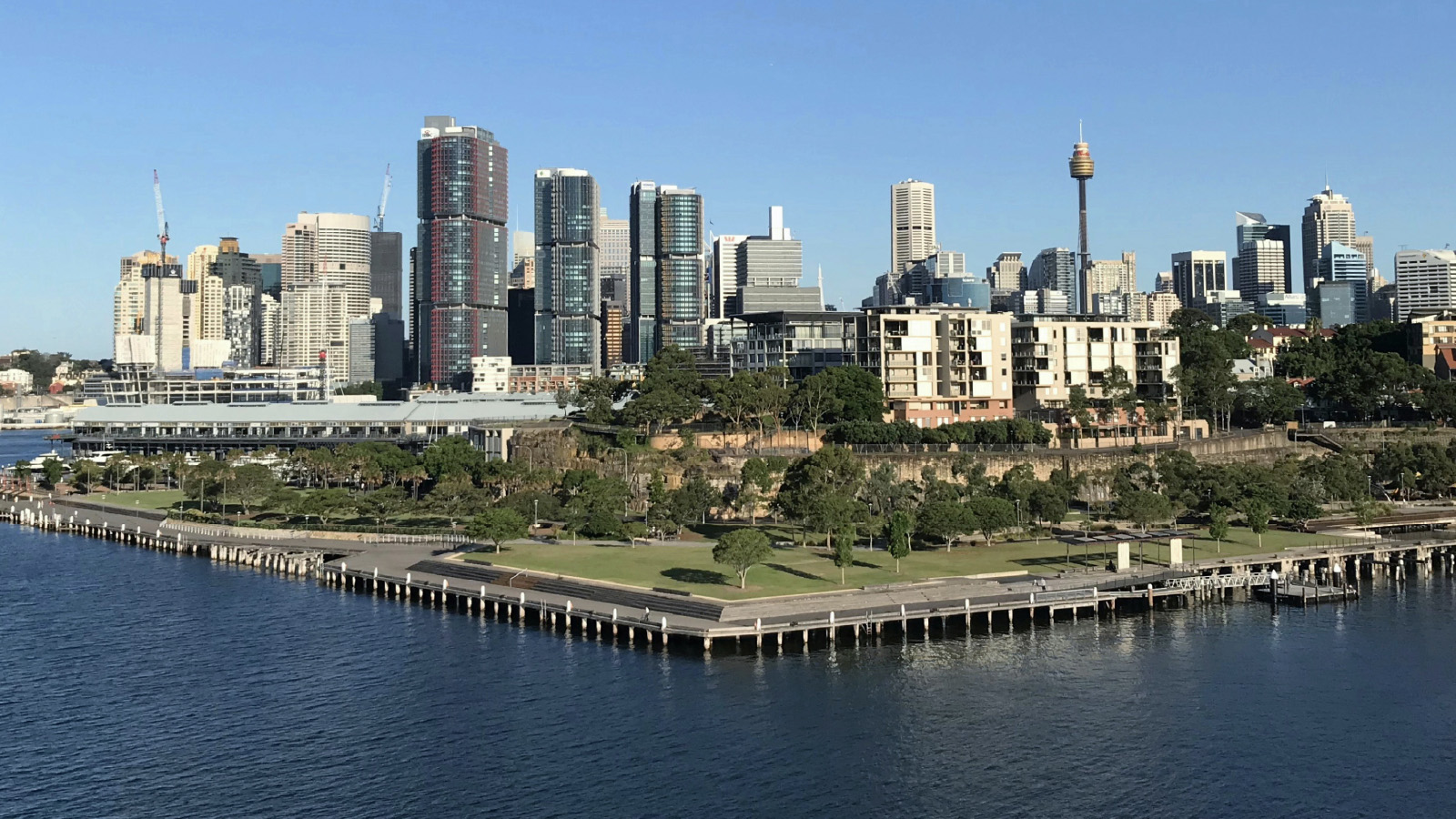
As a proud sponsor of the Property Council of Australia's NSW Precincts & Social Infrastructure Outlook, Cupix was in the room as a panel of property, infrastructure and investment leaders debated what makes precincts succeed, where the current housing agenda intersects with long-term urban vision, and why social infrastructure keeps getting left until last. And why that has to change.
Here's what stood out.
People drive value. Not buildings.
The opening keynote set the tone, and panellist James Barr captured it cleanly: "People are what drive the value in precincts." He wasn't talking abstractly. He was talking about the people who will live in those precincts, spend their money there, and build community from what's been designed for them.
It sounds obvious. But in a sector where feasibility models dominate early decision-making, the reminder that design for people (not just lots and GFA) is where value originates was both timely and necessary. The point on cultural inclusion landed just as hard: that inclusion in precincts means more than affordable housing quotas. It means recognising and celebrating First Nations culture as a foundational layer, not an afterthought.
Precincts are long-dated urban systems, not one-off projects
Emma Williamson, drawing on work through the Property Council, made the case clearly: successful precincts share three ingredients. Upfront public investment to de-risk the site. Catalyst institutional anchors. And long-term stewardship.
"Precincts are not one-off development projects," she said. "They are long-dated urban systems that need to evolve over time, through political cycles, through changes in government priorities, through changes in market conditions."
This matters because the temptation is always to treat a precinct like a large development project: plan it, fund it, build it, sell it. That model doesn't hold across a 30-year horizon. What does hold, the panel agreed, is strong coordination, clear governance, and collaborative leadership networks that bring government, institutions and industry together. The triple helix, as it's known, drawn from Brookings Institute research. Not because it sounds good in a strategy document. Because without it, precincts stall at aspiration.
Housing and precincts aren't competing. They're catalysts for each other
The question from the floor was blunt: is the housing agenda crowding out precinct thinking?
The panel's answer was a clear no, but with a condition attached. Josh Preston put it directly: housing is "the thing that brings the opportunity." Used well, residential density near existing infrastructure doesn't undermine precinct logic. It is precinct logic. The issue is what happens next. Does the housing unlock the mix of uses, social infrastructure, employment and activation that a precinct requires? Or does the mix get value-engineered out once the housing numbers are locked in?
James Barr made it visceral: imagine rezoning an area for 8,500 apartments. Two people per dwelling, that's 17,000 residents. You're building a town. "Imagine a small town without a pub, a childcare centre, a church," he said. "We've got to talk about social infrastructure upfront."
Social infrastructure has value. It just needs a business case
The instinct in feasibility is to see social infrastructure as cost: the yield drag, the non-revenue-generating component that gets squeezed when the numbers don't stack.
Barr pushed back hard. Charter Hall's social infrastructure REIT manages $2.2 billion in assets. Barwon manages the same. Macquarie and Brookfield are both deploying capital into the space. The funding flowing through NDIS, Medicare, childcare, education and emergency services represents approximately $180 billion per year in Australia, all of which requires physical real estate integrated into community. "There are positive, real return investment cases for social infrastructure," he said. "It just needs to be thought of upfront. The business case needs to be prepared, embedded in the masterplan, and protected from value engineering."
His closing message for the room: "Stop the pendulum in the middle. Do mixed use. Social infrastructure upfront has value. It makes better communities."
Resilience means designing for who will live there in 2056, not just today
Precincts built on a 30-year horizon need to account for a world that will look quite different. By 2056, one in four Australians will be over 65. That means mobility, disability support, accessibility, and the need for key workers to either live in or commute to those communities. All of which needs to be factored in now, not retrofitted later.
Resilience, as Barr framed it, is the ability to "predict, adapt and grow." That requires flexibility in masterplanning: not so much that nothing gets built, but enough that a tech precinct doesn't become a stranded asset when the commercial market shifts, and an all-residential precinct doesn't become a social failure because nobody thought about the school.
The Colosseum analogy was the one that stuck. "If you ran an NPV on the Roman Colosseum, what would it be?" Barr asked. "You can't put a price on it. But it's been driving value, cultural, economic, social, for 2,000 years."
The precincts to watch
For those looking for where momentum is building, the panel's shortlist was consistent.
Bays West / Glebe Island: proximity to the CBD, government commitment on housing targets, cultural activation. The question is what social infrastructure accompanies the density.
Broadmeadow, Hunter: 313 hectares, 20,000 homes, 15,000 jobs, 40,000 population target, 30-year strategy, and a proposed relocation of the Newcastle Entertainment Centre that, if confirmed, would serve as a significant catalyst move. If fast rail eventuates, the logic compounds further.
Defence site recycling: underutilised assets in core locations, ripe for state-led precinct activation. The principle of asset recycling as a growth driver for cities has renewed momentum.
The documentation gap that precincts can't afford to ignore
The governance challenges the panel described (alignment across agencies, accountability across delivery stages, stewardship across decades) all share a common underlying problem: at any given moment, different parties are working from different versions of reality.
It happens at design stage, when coordination between disciplines relies on models that may not reflect site conditions. It happens during delivery, when progress is reported through spreadsheets and site visits rather than a shared spatial record. And it happens at handover, when research consistently shows that the as-built documentation transferred to asset owners is incomplete, inaccurate, or simply not used. In one study, 62% of respondents said installed services only sometimes matched their documented locations at project completion.
For a precinct with a 30-year horizon and multiple stakeholders including government agencies, institutional investors, operators and communities, that documentation gap is compounding. Every stage built on incomplete information from the last creates risk that surfaces later, and expensively.
Teams working on complex, multi-stage projects are increasingly turning to spatial intelligence platforms to close that gap. By capturing 360° visual records of construction progress and converting them into navigable, time-stamped 3D documentation, it becomes possible to verify what's been built against what was designed at any point in the program, without requiring every stakeholder to be physically on-site. That spatial record then travels with the asset into operations, giving owners and facilities managers an accurate baseline for maintenance, compliance and future planning.
The principle aligns directly with what the panel was describing: a living record that grows in value across the full asset lifecycle, rather than documentation that becomes a liability the moment the project closes out.
See how spatial intelligence supports precinct-scale projects from design through to handover. Find Out More today.