%401x.png)


Even in a globally connected, digital economy, the fundamental infrastructure of road, rail, water, energy, healthcare and public spaces remains central to a functioning society. What is changing is the way we approach upgrades to existing infrastructure or the design, delivery and operation of new assets.
The evolution of infrastructure has encompassed increasing scale and greater complexity in terms of both delivery specifications and operational expectations. For Tier One Contractor, John Holland Group, staying ahead of the curve has been key to their 75+ year track record of successful major infrastructure projects across Australia and New Zealand.
In that time, the business has successfully innovated and adapted to navigate industry shifts and economic downturns, code changes, the emergence of new contract models such as Public-Private Partnerships and greater scrutiny of social factors including safety, lifecycle sustainability and stakeholder engagement and reporting.
This is evidenced in the company’s recent projects including the Melbourne Metro Tunnel with Rail Network Alliance, Sydney Football Stadium Redevelopment, Pacific Highway Upgrade, Bateman’s Bay Bridge, Sydney Children’s Hospital Stage 1 and Minderoo Comprehensive Cancer Centre.
Illuminating the golden triangle
In undertaking these sensitive and complex projects with their rigorous and demanding technical parameters, digital engineering and integrated project management systems have been fundamental for managing the golden triangle of project fundamentals – time, cost and quality.
The term ‘digital engineering’, while it has fairly recently entered the industry lexicon, is an evolution of traditional services coordination and Building Information Modelling (BIM) Management.
The major value of these approaches lies in ensuring individual engineering elements such as structure, electrical, hydraulics, ventilation, air conditioning, fire safety, security and vertical transportation are all effectively coordinated at the design stage. This helps reduce issues such as clashes, allows for fine-tuning for buildability, assessments of safety in design, and effective planning of program, schedules and material specifications.
“There's lots of different labels for the same thing, but it's just using the models that are available and the data within them to try and not just plan projects but also construct them and then run them after the fact,” explains John Holland Group Manager – Digital Engineering, Mitchell Erickson.
“It’s giving the delivery teams the information they need to make informed decisions.”
A recent John Holland Project, Sydney Football Stadium, is a good example of how digital engineering supporting complex construction on site to enhance a project at each stage of the development lifecycle.
“The stadium with the cladding finished looked simple enough but doesn’t tell the story of the complexity in the structure” Erickson explains.
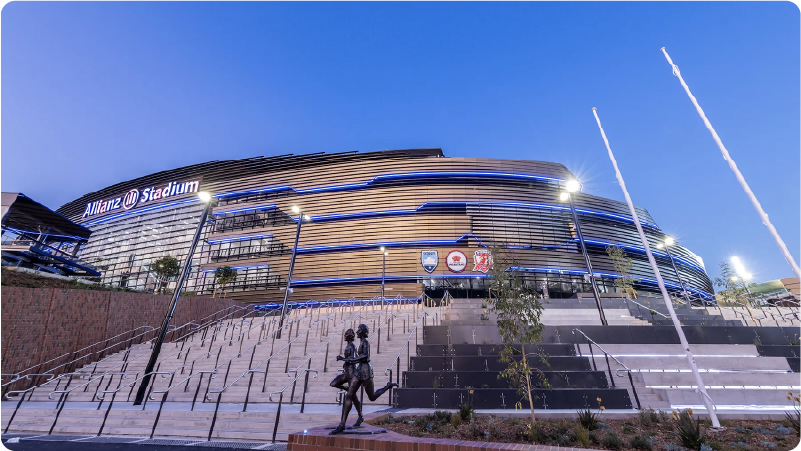
The 3D BIM model allowed the design and construction team to examine aspects of the plans that would not typically be possible with 2D schematics and elevations. That review incorporated factors such as access requirements and looking holistically at services and their proposed locations.
Reviews could also be done between the architectural and structural models to ensure the structure is aligned and columns are aligned. This Quality Assurance process ensured the design is effectively tested for buildability, economical with materials and meets required functional and operational specifications.
Building blocks for smoother delivery
Rework is one of the perennial issues in the Australian industry, resulting in lost time, wasted materials and sometimes a level of angst on site.
Using 3D modelling and coordinating design within one federated Building Information Management (BIM) model can help address the potential for rework if effective collaboration occurs during the design stage. BIM collaboration makes conversations around clashes and buildability happen earlier in the process.
Erickson says that John Holland’s team prioritises coordination, design package support, clash detection at key interface points between design and trade phase development
The model itself isn’t the solution – it’s the tool that enables the human experts to show each other through potential issues and test solutions. This is a less stressful process than navigating the same issues onsite when things already built may need dismantling, leading to additional costs and time pressures.
One of the most significant challenges delivery teams have throughout the industry is availability of information and the timing of that information being accessible, he says.
Digital engineering won’t eliminate changes after a project has broken ground, however it can ensure those changes are rapidly communicated, minimising disruption, delay and dismay.
In another example from a hospital project, façade brackets for post-occupancy cleaning and maintenance had been designed in. Erickson’s team were undertaking modelling and coordination against the proposed location of the brackets and found areas where some hydraulic risers run quite close to the facade, and a few spots that clip those bracket locations. Because it was spotted at design stage the risers could be moved.
This kind of future-proofing for the operational phase is harder to achieve when examining 2D design, Erickson says.
“You might not have picked that up, but when you look at it in 3D, you can just isolate those two items.”
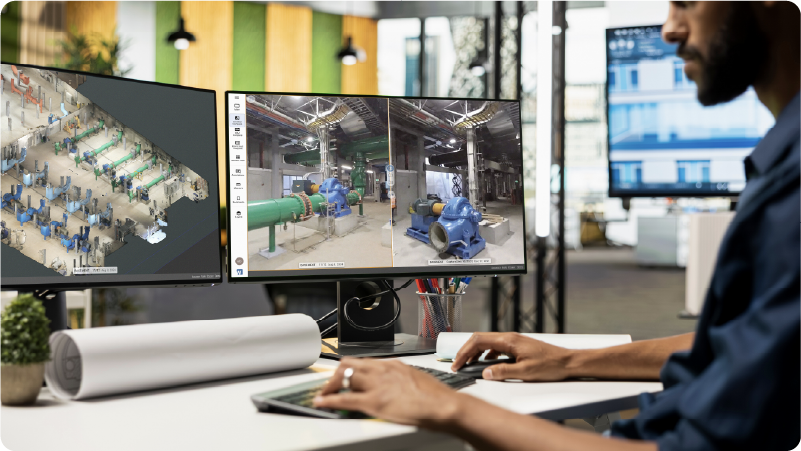
The John Holland team are using functions like being able to selectively show interesting or specific elements while screening out other features or deploying appearance templates to flag different things such as ductwork or electrical conduit as different colours.
“The beauty of digital engineering is you can have the x-ray and only just show the bones on the screen. You don't need to see the shadows and everything else that muddies the picture. You can just get to the bones if you need to. We can run clash detection, which does a physical check between (different) items in the model and flags anywhere those elements are coming into contact.”
Erickson stresses that even the best digital clash detection functionality still needs human oversight.
“It doesn't replace the need for people to actually look at what's going on, make sure that things are aligned, ensure your systems are complete, and do that human QA … nothing will be as good as a qualified person or an experienced person having a look at that model in its entirety.”
Onboarding reality capture
Bringing reality capture into the mix has been a “whole new game” according to Erickson. It has been initially adopted for some of the complex hospital projects and for a major infrastructure project in Adelaide, where Cupix is being used for tracking activities and as a client communication tool.
“It just adds a whole other level of site recording and scrutiny that's available,” Erickson says.
The physical load for site supervisors and project managers is also physically lightened. Instead of the traditional stack of ring binders and folders with PDFs and checklists and forms and multiple colours of marker, someone can walk around with a 360 camera and take scans that are automatically populated into the Common Data Environment of the project.
The time saving is enormous, not only in terms of time spent on site, but through eliminating the majority of manual work annotating and marking up product documentation afterwards.
“It's not just a matter of having a 2D markup of what's installed and what's not - you've got a 3D record of what's actually on site at that point in time.
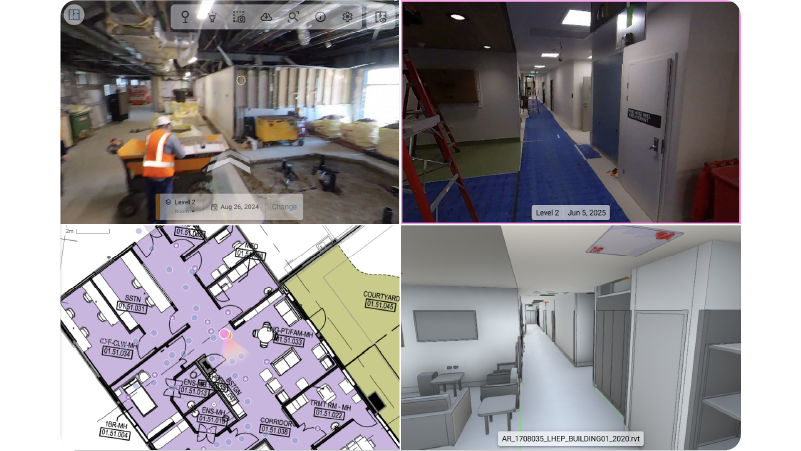
Cupix also enables scans of what’s been done on site to be automatically correlated to real-world coordinates in three dimensions. This can then be overlaid with the BIM model to track progress through time, check for accuracies and tolerances and quantify the progress of specific subcontractors and trades to validate milestone and progress payment obligations.
The level of transparency also helps to build trust, according to Erickson. Clients who might want to verify progress have an option to do so virtually, without needing to attend site.
Creating the common data environment
Cupix forms a link between John Holland’s common data environment where all the models and project information are stored and current project data and records. This means Erickson and the team can undertake detailed and specific inquiries to check quality, confirm compliances and examine and report on progress on a room-by-room or element-by-element basis.
The site captures can also be used to rapidly communicate back to the design team by linking Cupix to the design team’s Revizto software. Anything captured using 360 photo or video can be sent via Cupix straight into Revizto without the project manager or site supervisor needing to do a full marked up PDF and formal email correspondence or consultant advice notice.
“So, in terms of the integration between our design platform of what we're actually trying to achieve Cupix is showing what we've actually done on site. That's a great closing out of the loop.”
End users in the loop
At the end of the project, Cupix also helps integrate all the various information sources including BIM, progress scans, and as built imagery to create an accurate as-built model for the client that also has attached to it critical information such as warranties, performance specifications and more.
“When you do a 3D capture on site, and use that to update your model, you actually get a validated installed model of what has actually been installed,” Erickson says.
“So, we still have the design intent model, and the installed model could be very, very close to it, but there might be a few key changes that would make a difference to a facility owner down the track, should they want to make some modifications in an area, or have a look at particulars of what's going on in any given area with services.”
This kind of complete knowledge transfer also addresses the operational phase more effectively than analogue project data.
“Buildings don't have a five-minute lifespan, so should an item fail further down the track, it can actually be retraced, replaced with minimal impact to other services and other systems.”
It is a primary goal for John Holland to ensure that their projects are safe to build, and safe to operate and maintain. Part of the analysis of the BIM model at design stage incorporates this consideration. Having the whole context through using 3D visualisations enhances the outcome.
“John Holland operates to a minimum standard … so if a client says, hey, I don't have any digital requirements, we, as an organization, still have a minimum standard we maintain with how we want people doing modelling outputs. The quality of the modelling, and what's actually being produced, because we know that by doing that it helps us future-proof the project.”
The right hammer for nailing delivery
Erickson says that digital engineering, including Cupix, is a fantastic tool for communication and planning.
“It enables our construction and delivery teams to review and provide critical insights and track challenges before they become something on site which requires time and effort to rectify”
“And if we can design them out, fantastic, but if we can't, and we know they're there, we can ensure they're properly scoped, or we can ensure they're properly planned to minimise the impact they're going to have on site.”
Like any tool, visual modelling and visual data from projects needs to be put to use by the humans involved.
“You can have the best hammer in the world, but if it sits in the toolbox unused, then it's not going to help you, you know?”
He adds that the hammer's “only as good as the person swinging it, and digital engineering is much like that.”
It becomes useful only to the extent people pick it up and use it and that there are common approaches to engaging with the visual data environment.
“I always try and bring the focus back around to people. Because at the end of the day we're trying to improve people's lives, and we're trying to improve processes to make it less painful for people to build.”